
Diploma in Computer Applications (Data Analytics)
Programme outcomes: The course is job oriented in various positions in IT industry and other fields. The course is designed in such a manner that a person who is 12th passed in any stream can easily understand the syllabus and have knowledge of important topics of the computer applications. Such that basics of MS- Office suite, Advanced Excel, Excel, Adobe can lead its career into technical jobs of MNCs, Programming languages such as C, C++ and python gives career into programming jobs.
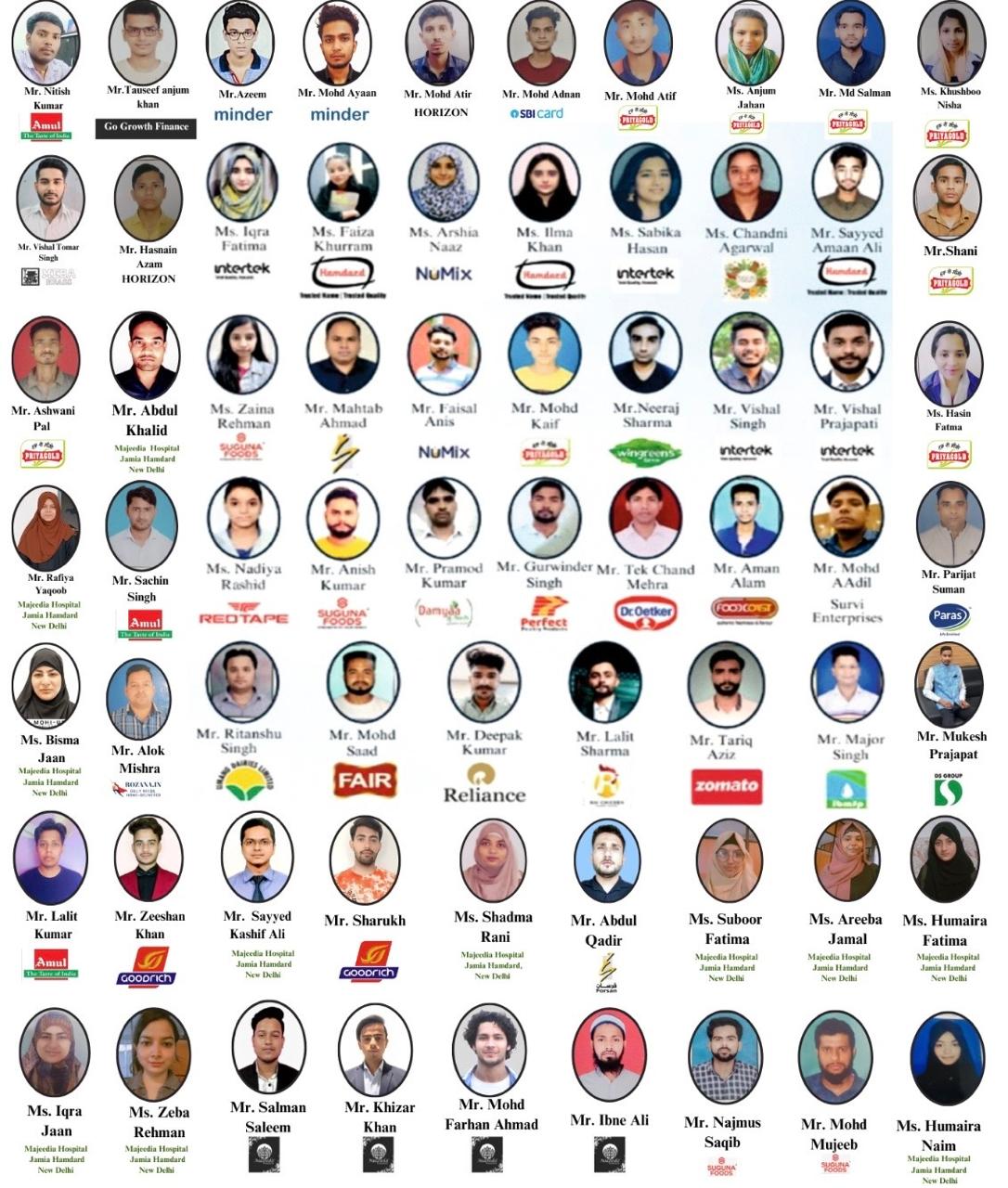
For a person with willing to secure career into emerging fields of Artificial Intelligence, Machine Learning and Data Analytics will have practical and theoretical knowledge at the Second Semester. The internship, a student can choose into their favourite job area.
Duration
1 year (2 Semesters)
Examination
As per the University rules, there will be provision of Internal assessment for each paper which will carry 40% weightage. The final term- end examination will be held on semester basis and will carry 60% weightage.
Passing Marks: 50%
Minimum Eligibility
12th passed
Course Fee
10000/- per semester
COURSE STRUCTURE
| S.NO. | MODULE | MODULE/ SUBJECT CODE | MODULE NAME | PERIODS | EVALUATION SCHEME | COURSE TOTAL | CREDITS | |||||||
| L | T | P | MID TERM EXAM | EXTERNAL EXAM | ||||||||||
| IA | AS+AT | TOTAL | ||||||||||||
| 1ST SEMESTER | ||||||||||||||
| 1 | Module-1 | DCD-101 | Introduction to computer application
and C programming |
4 | 1 | 0 | 30 | 10 | 40 | 60 | 100 | 5 | ||
| 2 | Module-2 | DCD-102 | Introduction to Object Oriented Programming using C++ | 4 | 1 | 0 | 30 | 10 | 40 | 60 | 100 | 5 | ||
| 3 | Module-3 | DCD-103 | Web Designing & Html | 4 | 1 | 0 | 30 | 10 | 40 | 60 | 100 | 5 | ||
| 4 | Module-4 | DCD-104 | LAB 1 OF C, C++ & Microsoft Suite | 0 | 1 | 4 | 0 | 0 | 40 | 60 | 100 | 5 | ||
| 5 | Module-5 | DCD-105 | LAB 2 Web Designing and Adobe Photoshop, Adobe Dreamweaver | 0 | 1 | 4 | 0 | 0 | 40 | 60 | 100 | 5 | ||
| 1st semester Credits | 12 | 5 | 8 | 500 | 25 | |||||||||
| 2ND SEMESTER | ||||||||||||||
| 6 | Module-6 | DCD-201 | AI and ML using Python | 4 | 1 | 0 | 30 | 10 | 40 | 60 | 100 | 5 | ||
| 7 | Module-7 | DCD-202 | Introduction to Data Analytics
|
4 | 1 | 0 | 30 | 10 | 40 | 60 | 100 | 5 | ||
| 8 | Module-8 | DCD-203 | Lab Of Data Analytics using MS Excel | 0 | 1 | 4 | 0 | 0 | 40 | 60 | 100 | 5 | ||
| 9 | Module-9 | DCD-204 | AI and ML Lab using Python | 0 | 1 | 4 | 0 | 0 | 40 | 60 | 100 | 5 | ||
| 10 | Module-10 | DCD-205 | 3 months Project/ training | 0 | 0 | 20 | 0 | 0 | 200(100*+100*) | 100** | 300
(100*+ 100*+ 100**) |
20 | ||
| 2nd semester Credits | 8 | 5 | 28 | 700 | 40 | |||||||||
| Total | 1200 | 65 | ||||||||||||
*Internal only, **Marks for Industrial training by from supervisor +/ Project report by supervisor + /presentation by examiner.
IA- Internal Assessment
AS- Assignment
AT-Attendance
L-Lecture
T-Tutorial
P-Practical
SEMESTER I
MODULE 1
DCD-101: Introduction to computer application and C programming
Unit I- Basics of Microsoft Word, PowerPoint, Excel, Advance MS-Excel, Basic computer setting, different software (editors, file extensions, applications), Computer Hardware, Input/Output devices, multiple devices attached with the computer system, functioning of each attached devices, internal hardware of desktop/monitor and CPU.
Unit II- Identifiers in C, Consonants, IQ operations, operators and expressions, control flow statements- if statement, switch statement, unconditional branching using go-to statement,
Unit III – Introduction to while loop, do while loop, for loop, break and continue, special cases, working with functions, array, functions, pointers, string handling, searching and sorting, stack.
MODULE 2
DCD-102: Introduction to Object Oriented Programming using C++
Unit I – Introduction to C++ Language, Features- difference from C, functional overloading, optional parameters, reference Variables, operator overloading, dynamic memory allocation;
Unit II – OOPs Concept- class and objects, creation and destruction of objects, data members, member functions, data members, this pointer, constructor and destructor, static class member;
Unit III – Inheritance; polymorphism; I/O stream- file stream, text file handling, binary file handling, error handling during file operations, overloading <<and>> operators; Exception Handling, Templates.
MODULE 3
DCD-103: WEB DESIGNING & HTML
Unit I- HTML- HTML-Introduction, basic formatting Tags, Tags and attributes, Tags Vs element, grouping using Div and span, lists, images, hyperlink, Table, iframe, form, headers, miscellaneous.
Unit II- Introduction to web designing-Client and Server Scripting Languages, Domains and Hosting, Responsive Web Designing, Types of Websites (Static and Dynamic Websites), Web Standards and W3C recommendations; Adobe Photoshop– Introduction to Adobe Photoshop, Types of Image Graphics, Interface Tour of Photoshop, Color Modes, Resolution and Presets, Tools in adobe photoshop, Layers group and smart object, Blending Options, Filter Effects, Client requirement analysis, Realtime Website Layout Design; Adobe Flash- basics, tools, application, template design; Adobe Dreamweaver- basics, tools, application, template design.
Unit III- Web Hosting- Web Hosting Basics, Types of Hosting Packages, Registering domains, Defining Name Servers, Using Control Panel, Creating Emails in C panel, Using FTP Client, Maintaining a Website; Responsive Web Design with Bootstrap- Introduction to Responsive Design, Mobile first design concepts, Common device dimensions, View-port tag, Using CSS media queries, Menu conversion script, Basic Custom Layout, Introduction to Bootstrap, Installation of Bootstrap, Grid System, Forms, Buttons, Icons Integration. CSS- Introduction to Cascading Style Sheets, Types of CSS, CSS Selectors, CSS properties, Realtime Implementation, text fonts, display positioning
MODULE 4
DCD-104: LAB (1) OF C, C++ & Microsoft Suite
Unit I- Computer Application Lab of Unit 1 & 2 (MS-Word, MS-PowerPoint, MS- Excel, File Extensions).
Unit II- C Lab (IQ operations, while loop, do while loop, for loop, break and continue)
Unit III- C++ Lab (optional parameters, reference Variables, operator overloading, dynamic memory allocation, OOPs Concept)
MODULE 5
DCD-105: LAB (2) Web Designing and Adobe Photoshop, Adobe Dreamweaver
Unit I- Lab of (Adobe Photoshop, Adobe Dreamweaver, Web Hosting,
Responsive Web Design with Bootstrap)
Unit II- Lab of HTML- (web designing, HTML coding, Linking, Hyperlinking, Web page Implementation of Statistics in Excel)
SEMESTER II
MODULE-6
DCD-201: AI and ML using Python
Unit I- AI Introduction- AI problems, Agents and Environments, Structure of Agents, Problem Solving Agents Basic Search Strategies: Problem Spaces, Uninformed Search (Breadth-First, Depth-First Search, Depth-first with Iterative Deepening), Heuristic Search (Hill Climbing, Generic Best-First, A*), Constraint Satisfaction (Backtracking, Local Search), Advanced Search: Constructing Search Trees, Stochastic Search, AO* Search Implementation, Minimax Search, Alpha-Beta Pruning Basic Knowledge Representation and Reasoning: Propositional Logic, First-Order Logic, Forward Chaining and Backward Chaining, Introduction to Probabilistic Reasoning, Bayes Theorem
Unit II- Machine-Learning- Introduction. Machine Learning Systems, Forms of Learning: Supervised and Unsupervised Learning, reinforcement theory of learning, feasibility of learning, Data Preparation– training versus testing and split. Supervised Learning: Regression: Linear Regression, multi linear regression, Polynomial Regression, logistic regression, Nonlinear Regression, Model evaluation methods. Classification: – support vector machines (SVM), Naïve Bayes classification
Unit III, Introduction to Python, Introduction, Python Basics: Entering Expressions into the Interactive Shell, The Integer, Floating, Point, and String Data Types, String Concatenation and Replication, Storing Values in Variables, Your First Program, Dissecting Your Program. Flow control: Boolean Values, Comparison Operators, Boolean Operators, Mixing Boolean and Comparison Operators, Elements of Flow Control, Program Execution, Flow Control Statements, Importing Modules, Ending a Program Early with sys.exit().
MODULE 7
DCD-202: DATA ANALYTICS
Unit I- Statistics- Basics, mean, mode, median, variance, cumulative frequency, standard deviation, hypothesis testing- z-test, p-test, t-test, n-test, f-test, ANOVA.
Unit II- Introduction to Statistical Analysis- Counting, Probability, and Probability Distributions, Sampling Distributions, Estimation and Hypothesis Testing, Scatter Diagram, ANOVA and Chi-square, Imputation Techniques, Data Cleaning, Correlation and Regression.
Unit III- Introduction to Data Analytics- Data Analytics Overview, Importance of Data Analytics, Types of Data Analytics, Descriptive Analytics, Diagnostic Analytics, Predictive Analytics, Prescriptive Analytics, Benefits of Data Analytics, Data Visualization for Decision Making, Data Types, Measure Of central tendency, Measures of Dispersion, Graphical Techniques, Skewness & Kurtosis, Box Plot, Descriptive Stats, Sampling Funnel, Sampling Variation, Central Limit Theorem, Confidence interval; Optimisation techniques, ANOVA
MODULE 8
DCD-203: LAB OF DATA ANALYTICS using MS Excel
- Descriptive Statistics in Excel
- Correlation Analysis in Excel
- Hypothesis Testing (F-test Analysis in Excel)
- Hypothesis Testing (T-test Analysis in Excel)
- ANOVA – Analysis of Variance in Excel
- Regression Analysis in Excel
- Advance Statistical Analysis
MODULE 9
DCD-204: AI and Ml Lab using Python
- Demonstrate about Basics of Python Programming.
- Demonstrate about fundamental Data types in Python Programming. (i.e., int, float, complex, bool and string types)
- Demonstrate the working of following functions in Python.
- (i) id( )
- (ii) type( )
- (iii) range( )
- Write a Python program to demonstrate various base conversion functions.
- Write a Python program to demonstrate various type conversion functions.
- Program to implement Blind/uninformed search algorithm
- Program to implement Heuristic
- File operations and learning to load csv files
- Learning the use of Libraries Scikit Learn
- Separating datasets into training and testing
- Cleanup data with Pandas (With sample dataset)
- Handling Missing values
- Scaling and Normalization
- Parsing Dates and other format
- Character Encodings
- Inconsistent Data Entry
- Basic visualization with Seaborn
- Line Plot, Bar Plot, scatter plot, Density plot, Point plot
.
MODULE 10
DCD-205- PROJECT/ TRAINING
3 Months internship/Project